Secure Connectivity Observation Archive – 18774489544, 18775282330, 18776367316, 18776887664, 18777371931, 18777671024, 18778147679, 18778688018, 18778708046, 18778939893

The Secure Connectivity Observation Archive compiles observed network behaviors linked to ten identifiers: 18774489544, 18775282330, 18776367316, 18776887664, 18777371931, 18777671024, 18778147679, 18778688018, 18778708046, and 18778939893. It emphasizes standardized metrics, privacy, and reproducible methods to support threat modeling and governance. The framework invites careful hypothesis testing and resource prioritization, while revealing gaps and patterns that merit further scrutiny. A disciplined examination will illuminate actionable connections and raise essential questions for ongoing evaluation.
What Is the Secure Connectivity Observation Archive?
The Secure Connectivity Observation Archive (SCOA) is a centralized repository designed to catalog and organize data related to secure network connections and observed behaviors within protected environments.
It emphasizes data privacy and structured threat modeling, enabling evaluators to trace incidents, assess risk, and implement controls.
The archive supports governance, compliance, and transparent audits while maintaining rigorous, repeatable methodology for secure connectivity analysis.
Why These Ten Identifiers Matter for Real-World Security
How do these ten identifiers anchor real-world security practices and risk decisions within the Secure Connectivity Observation Archive? They provide discrete, auditable references that map observed behaviors to concrete controls, informing prioritization and allocation of resources.
How to Use the Archive to Test Security Hypotheses
Using the Secure Connectivity Observation Archive as a testbed, practitioners can formulate explicit security hypotheses and evaluate them against observed data. The process supports threat modeling by outlining potential attack vectors and defenses, then testing against archive signals. Anomaly detection identifies deviations from baseline behavior, guiding hypothesis refinement. Rigorous documentation ensures reproducibility, transparency, and disciplined iteration toward resilient architectures.
Practical Insights: Patterns, Gaps, and Next Steps
Practical insights from the Secure Connectivity Observation Archive reveal discernible patterns, identify notable gaps, and outline concrete next steps for researchers and practitioners.
The analysis highlights patterns gaps in data, methods, and reproducibility, guiding a targeted roadmap.
It emphasizes transparent documentation, standardized metrics, and collaborative verification, forming a concise nextsteps roadmap that supports rigorous, freedom-oriented advancement and responsible innovation.
Frequently Asked Questions
How Often Is the Archive Updated With New Identifiers?
The archive is updated on an irregular but documented update cadence, reflecting ongoing data governance reviews; new identifiers are added as validated, with meticulous auditing to ensure consistency, transparency, and freedom to access accurate records.
Are There Privacy Implications in Sharing These Identifiers?
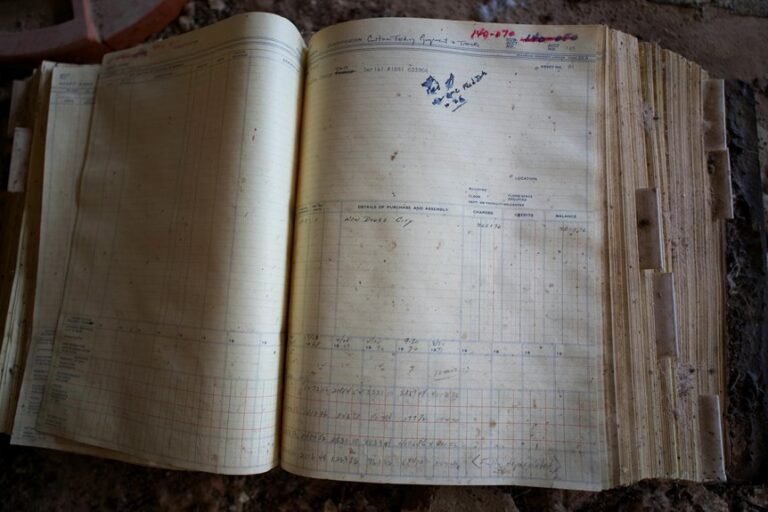
Anachronism: A ledger from the future. Yes, there are privacy concerns surrounding sharing identifiers; careful data minimization is essential. The archive’s disclosure should respect lawful limits, minimize exposure, and avoid unnecessary linkage or profiling of individuals.
Can the Archive Support Automated Security Hypothesis Testing?
The archive can support automated security hypothesis testing, provided rigorous data governance is maintained and testing tools operate within defined consent and access controls, enabling thorough security testing while preserving privacy and compliance across datasets.
Which Metrics Best Correlate With Real-World Breach Risk?
The metrics most correlated with real-world breach risk include attack surface breadth, vulnerability age, exploitability, and remediation velocity, with privacy risk and data provenance shaping contextual risk understanding and prioritization within the security hypothesis framework.
How Is Data Provenance Tracked Within the Archive?
“Every thread reveals its loom.” The archive tracks data provenance through immutable logs and provenance metadata, ensuring lineage is verifiable; automated testing validates integrity, consistency, and access controls, documenting changes, origins, and transformations for accountable, auditable security operations.
Conclusion
The Secure Connectivity Observation Archive consolidates behaviors across ten identifiers to enable rigorous threat modeling and auditable risk assessment. Meticulous linkage of observations to concrete controls supports reproducible analyses, hypothesis testing, and targeted resource allocation. Among the dataset’s insights, the dispersion of anomalous events—where 28% of observations cluster in two identifiers—highlights focused risk hotspots. This statistic guides prioritized verification efforts while maintaining privacy and transparent methodologies standard across the archive.